
The Movement Skills That Matter With Age
Aging rarely arrives as a single, noticeable moment. More often, it unfolds quietly in the background of daily life - so gradually that you only recognize it when a once-effortless movement asks for a little more attention than it used to.
In earlier years, movement goals tend to be shaped by ambition and aesthetics: touching your toes with ease, deepening a backbend, or working toward a handstand that once felt impossible. These milestones are not without value, but they often emphasize what the body can achieve in ideal conditions, rather than how it supports you in the rhythm of everyday living.
With time, something shifts.
The focus moves away from how impressive a movement looks and toward how reliable it feels. It becomes less about performance and more about trust. Can you step off a curb without second-guessing your balance? Carry groceries without bracing your shoulders? Reach overhead without hesitation? Get up from the floor without negotiating with your joints?
Healthy aging is not about becoming more flexible or more athletic. It is about staying connected to a body that feels steady, responsive, and capable in the moments that matter most.
Flexibility Alone Doesn’t Tell the Whole Story
Flexibility often gets the spotlight because it is visible, measurable, and easy to compare. It is the quality most people notice first - and sometimes the one they chase the longest.
But flexibility, on its own, is simply the ability of muscles to lengthen. While that is useful, it does not automatically translate into control, stability, or ease of movement.
This is why two people with similar flexibility can move through the world in very different ways. One may feel cautious on stairs or uneven ground, while another navigates the same terrain with quiet confidence. The difference is not just range of motion - it is how that range is supported, coordinated, and controlled.
Real-life movement depends on a blend of qualities working together: strength, awareness, timing, coordination, and adaptability. In other words, it is not just about how far you can move, but how well you can move when life is unpredictable.
The Four Movement Skills That Matter
Functional movement is not built from a single ability. It emerges from several interconnected skills, each one reinforcing the others in subtle but essential ways.
1. Mobility
Mobility is more than flexibility - it is moving through range with strength, control, and awareness. It’s not just reaching a position, but owning it.
Mobile joints move smoothly, respond well, and return with ease. Mobile hips make sitting, standing, and walking feel fluid. Mobile shoulders make reaching, lifting, and carrying feel integrated rather than strained.
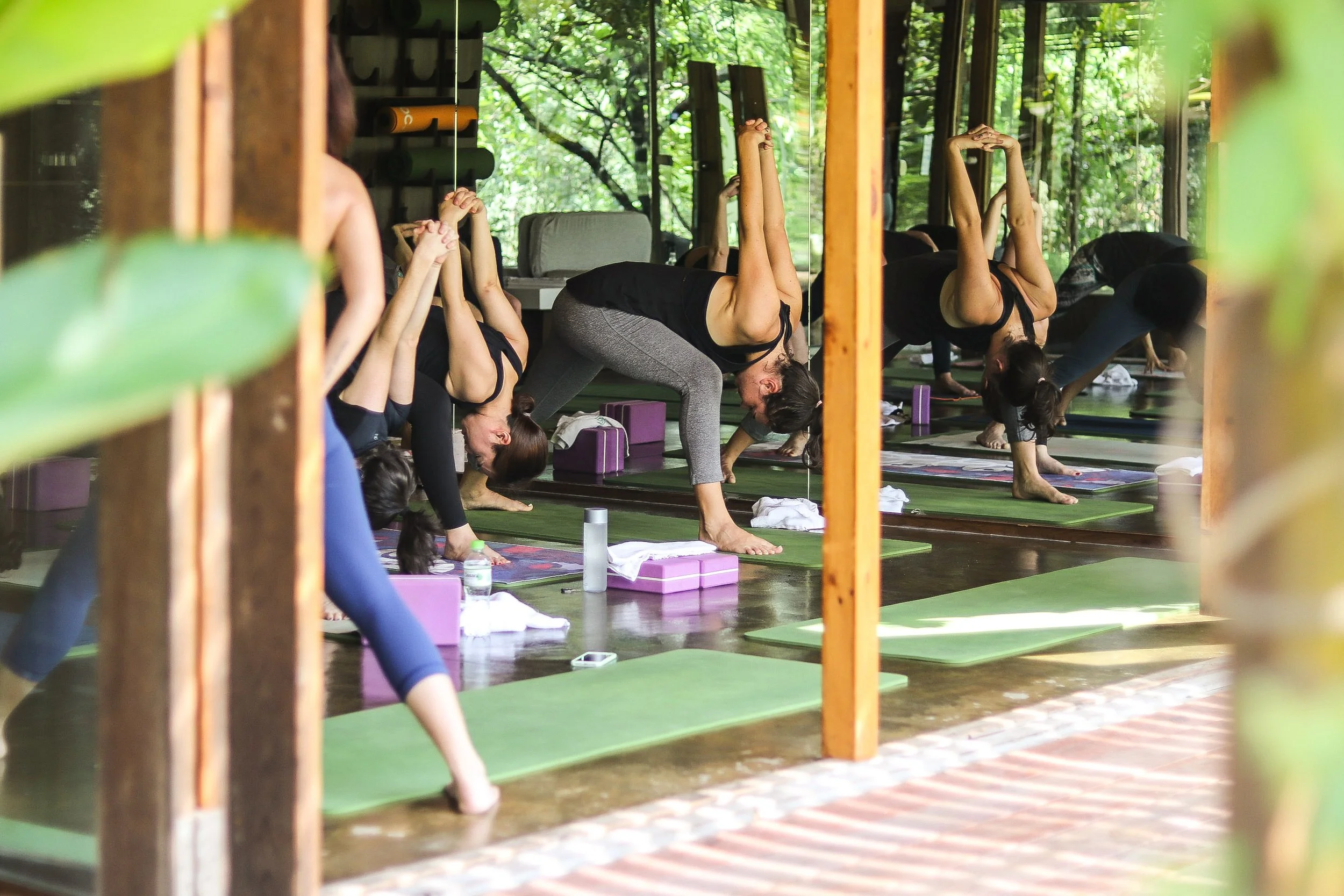
Yoga builds mobility through active movement, not passive stretching. Transitions, lunges, twists, and flows keep the body engaged throughout motion, training control at every stage.
Over time, everyday actions like bending, reaching, and rotating feel natural rather than effortful.
2. Balance
Balance often goes unnoticed - until it’s challenged.
It supports daily life in subtle ways: walking on uneven ground, standing in crowds, stepping into the shower, or shifting weight while dressing.
Yoga develops balance by introducing gentle instability. Standing poses require constant micro-adjustments to stay steady.
Just as important is recovery. True balance isn’t about never wobbling - it’s about regaining steadiness calmly and without tension.
3. Strength
Strength is less about appearance and more about function.
Daily life depends on it: standing from a chair, carrying groceries, climbing stairs, and maintaining posture.
Yoga builds strength through bodyweight resistance and holds like Chair, Warrior II, and Plank, reinforcing practical movement patterns.
This is not maximal strength - it is dependable strength that supports daily life without strain.
4. Coordination
Coordination connects intention to action. It is timing, sequencing, awareness, and real-time adjustment.
Yoga develops coordination through flowing sequences and mindful transitions that require attention and adaptability.
Over time, movement becomes more efficient, responsive, and intuitive, especially in unfamiliar situations.
Why Yoga Supports Long-Term Movement Health
One of yoga’s greatest strengths is that it does not isolate movement skills - it weaves them together.
In a single practice, mobility is developed through transitions, strength through sustained postures, balance through standing poses, and coordination through sequencing and flow. Rather than training one quality at a time, the body learns to integrate them.
At the same time, yoga supports mental and emotional well-being. Regular movement has been associated with reduced stress, improved mood, better sleep, and greater self-awareness. As life evolves with age, these benefits become just as valuable as physical capability.
In this way, yoga becomes more than exercise. It becomes a practice of staying connected - to breath, to body, and to the experience of living in motion.
Rethinking What Progress Looks Like
Progress in movement is often subtle. It rarely announces itself in dramatic or obvious ways.
Instead, it shows up in small but meaningful shifts: climbing stairs without hesitation, carrying groceries with less effort, or moving through daily tasks with a growing sense of ease and confidence.
These changes may seem minor at first glance, but they reflect something important - a body that is functioning with greater efficiency and requiring less internal negotiation.
True progress is not about doing more. It is about doing what you already do with more freedom and less resistance.
The Takeaway
Healthy aging is not defined by extreme flexibility or advanced physical feats. It is defined by the ongoing ability to move through life with confidence, comfort, and ease.
Mobility creates freedom. Balance provides stability. Strength offers support. Coordination brings everything into harmony.
Yoga nurtures all of these qualities while encouraging a deeper awareness of how the body moves and feels in everyday life. Because longevity is not measured by how far you can stretch, it is measured by how steadily, comfortably, and confidently you can move through your world - one grounded step at a time.