
How Restorative Yoga & Sound Heal Your Body from Within
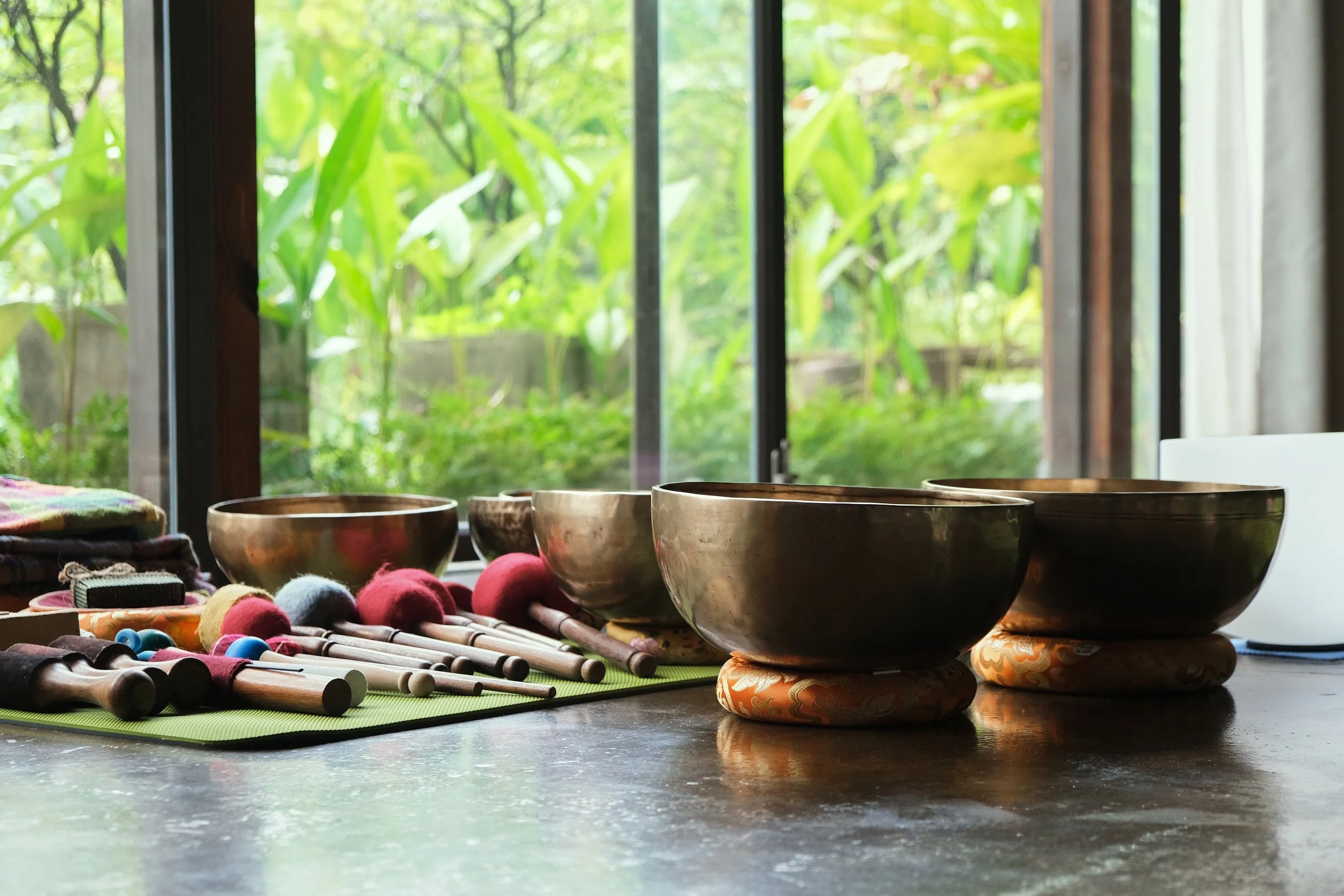
Most people arrive at a restorative yoga and sound session carrying two things: a tired body and a reasonable amount of skepticism. A bowl. Some bolsters. Lying still for an hour. And then they leave not entirely sure what just happened to them, but certain that something did-something slower and quieter and more complete than anything they had planned to feel on a Friday evening.
That shift - from mild doubt to unexpected stillness - is worth understanding. Because what happens in a restorative & sound session isn’t abstract or mystical. It’s physical. It’s responsive. It’s the result of two practices meeting at exactly the point the body has been waiting for.
When quiet isn’t enough
The thing about silence is that it's passive. It removes noise from the room but gives the nervous system nothing to do with that absence. A nervous system that has spent the week under pressure-deadlines, screens, the low-grade hum of urban life-doesn't automatically downshift just because the environment has gone quiet. It keeps running. Just with less to process.
This is why lying in a dark room with your eyes closed still doesn't always feel like rest. The body is horizontal, the mind is elsewhere, and somewhere in between, the jaw is clenched and the shoulders are slightly raised and nobody officially decided on either of those things. Silence is the absence of input. Restorative yoga paired with sound is something the body has actually been waiting for.
The yoga that asks nothing of you
Most movement practices make demands: push harder, reach further, hold the alignment. Restorative yoga flips the script. It doesn't ask you to perform; it asks you to be held.
In this space, bolsters carry your spine and blankets take the weight of your limbs. You are placed, deliberately, into positions where gravity can do the slow, honest work of releasing tension that has been "gripped" for years. We hold these poses for five, ten, or fifteen minutes - long enough for the nervous system to realize the floor isn't going anywhere. It is the first time your body has been given genuine structural permission to stop.
Then the sound enters - and everything lands faster
This is where sound changes everything about what restorative yoga can do.
Strike a singing bowl and something unusual happens. The sound doesn't arrive and disappear-it opens. Harmonics fold over each other, frequencies shift, and what began as one tone becomes something layered and alive in the air. The body, without consulting anyone, moves with it.
Because sound is vibration, and vibration is physical, it behaves as much like touch as it does like audio. It lands in the chest and travels through the sternum before the thinking mind has had time to form an opinion about it.
The one question your body never stops asking
The autonomic nervous system doesn't care about your intentions or your playlist. It reads the environment continuously, running one question on a loop: is it safe to let go yet?
Restorative yoga begins to answer through the body by communicating that no effort is required. The singing bowl accelerates this. The vagus nerve-which connects the brain to the heart, lungs, and gut-responds to slow, sustained, harmonic sound as an environmental signal, registering it below conscious thought as: nothing is coming. Nothing needs to be braced for. This is vagal activation-the physiological opposite of fight-or-flight, and the state the body was designed to spend most of its time in.
Where the two practices meet
Separately, restorative yoga and sound therapy each move the body toward rest. Together, they close a gap that either leaves open alone. The props say: you're supported. The bowl says: you're safe. Both arrive simultaneously, through different channels-one structural, one acoustic-and the body receives them at the same moment. The result isn't the sum of two practices. It's something that compounds: a depth of release that most people haven't felt since they last slept without setting an alarm.
This is when the unexpected things tend to happen. A heaviness that isn't tiredness. A loosening behind the sternum that nobody asked for. Occasionally something that feels close to emotion, arriving without a clear reason and leaving just as quietly. None of it is unusual. It's the body completing what it has been holding-in a room that has finally, between the bolsters and the bowl, made that possible.
When the final sound fades and the room returns to quiet, it is a different quality of quiet. There is weight to it. A sense of completion the mind isn't rushing to fill. The body has arrived somewhere it wasn't an hour ago…
A soft place to begin
At Yoga Pod, our Restorative & Sound session runs every Friday by our lovely Thao - supported postures, live singing bowls, and an hour the body tends to remember long after the week has been forgotten. Some things explain themselves more clearly in the body than they ever could on a page. So have you had a chance to give this practice ago? :)